Can you tell us a little about yourself and your experience at Crummer?
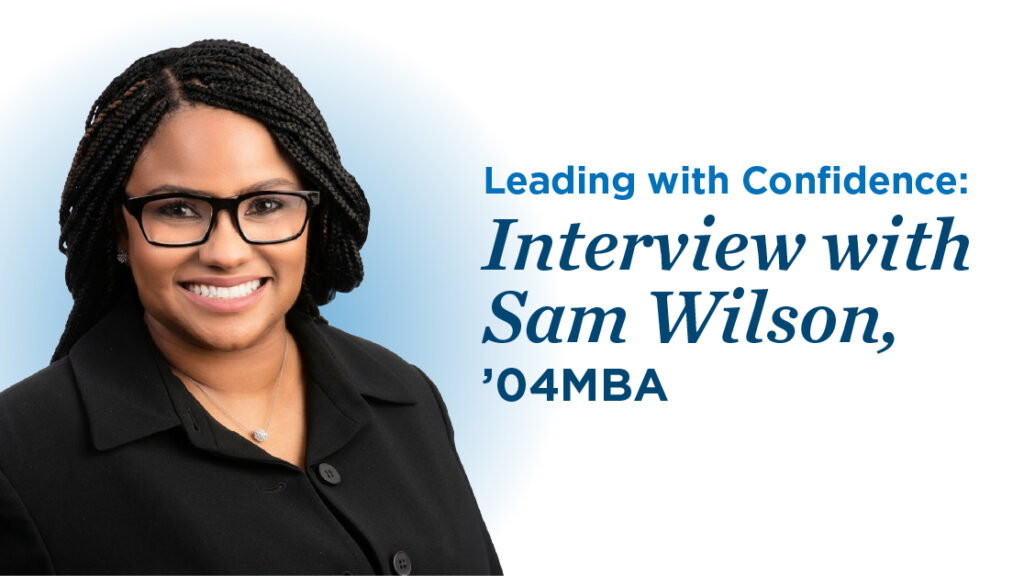
I was in the Professional MBA (PMBA) program at Crummer and graduated in 2004. The PMBA was designed for working professionals, so we attended classes at night while I worked in the marketing department at Orlando Utilities Commission, OUC-The Reliable One, which I loved. Crummer helped me become fearless about understanding my numbers and financials. If you knew me before, you’d know that was a huge fear of mine, and now it’s the opposite—I embrace the numbers. I also took an entrepreneurial class that helped me understand how to build a company from the ground up, how to understand the market, and how to employ innovative marketing techniques, which Crummer was known for.
What has life looked like for you since graduation?
After Crummer, I went to work for a multinational company called CHEP, and not long after that, I helped open Wilson Group with the intent of staying briefly. Sixteen years later, I’m still there—now we’re Centrus Financial Strategies, a financial planning firm operating in two cities instead of one—where I serve as director of marketing and am a partner. I was also selected in November as a franchisee for Home Helpers and was awarded The Villages territory, with plans to open in April.
What does it mean to you to be an alumna of Crummer?
It means a lot to me that the Crummer MBA is a real force in the communities we serve—especially Central Florida—by being involved, remaining significant, and adding value so the degree stands out rather than feeling like just any other MBA.
Tell us about your time on the Crummer Alumni board. How did you get involved? What impact did it have on you?
Shortly after graduating from Crummer, I received an unexpected invitation that shaped my long-term connection to the school when Susie McClintock, then serving on the board, reached out after following my early career and encouraged me to get involved with the Crummer Alumni Board. She soon nominated me, and I was welcomed aboard, where I first met board chair Bob Hartmann, who made an immediate and lasting impression. What began as a warm introduction grew into one of the most meaningful friendships of my life, as Bob became both a mentor and, eventually, a client of my firm, Centrus Financial Strategies. More importantly, he showed me by example what it means to be a committed Crummer alumnus—giving back, supporting others, and staying deeply connected to the community. Serving on the board was both meaningful and formative, and I remain profoundly grateful to both Susie and Bob for their encouragement and leadership, which continue to shape how I engage with the Crummer community today.
When you hear about all the new things Crummer is doing under Dean Menon’s leadership, what excites you the most?
Of all the exciting initiatives coming out of Crummer right now, the Crummer 3.0 strategy is the one that really captures my attention. What resonates with me is Dean Menon’s commitment to preserving Crummer’s strong foundation in the core principles of business while also recognizing how quickly the business landscape is evolving.
Today’s leaders have to be comfortable operating at the intersection of technology, analytics, and innovation. That’s why programs like the STEM MBA are so important. They’re designed to prepare students for a world where data, digital transformation, and strategic thinking are becoming central to how organizations compete and grow.
If you had one piece of advice for a current Crummer student, what would it be?
Don’t just focus on mastering the material; focus on mastering yourself as a leader.
Crummer gives you access to an incredible network of faculty, mentors, and peers. Take full advantage of that. Ask questions, seek feedback, and put yourself in situations that stretch you beyond your comfort zone. Classroom knowledge is important, but the real value comes from how you apply that knowledge in real-world situations.
Use this time to refine how you think, how you communicate, and how you lead. If you graduate not only with stronger technical skills but also with the confidence to make thoughtful decisions and bring people together around a shared vision, you’ll leave Crummer with something far more valuable than a degree; you’ll leave with the foundation to lead with purpose.